
COLUMN
コラム
Discover Kyoto-Style Soba: The Charm and Best Ways to Enjoy This Traditional Japanese Dish
この記事の監修者
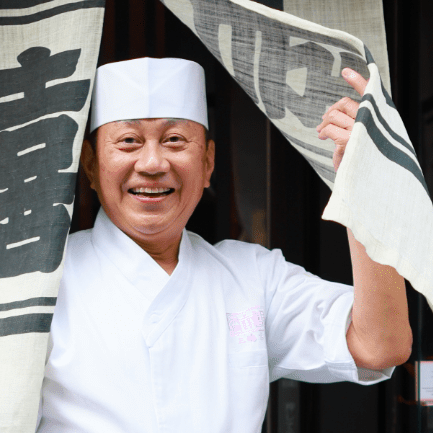
有喜屋 三代目店主
三嶋吉晴
有喜屋(うきや)三代目店主。有喜屋は1929年 京都先斗町に創業した本格手打ちそばと蕎麦料理を提供するそば屋です。 最年少で京都府優秀技能者表彰「京都府の現代の名工」を受彰。 手打そば職人としては全国で初となる「卓越技能章」を厚生労働大臣より受彰。 天皇陛下から授与される褒章である、「黄綬褒章」を拝受。
Soba is one of Japan’s most iconic noodle dishes. It is enjoyed as an everyday meal, but it also reflects the unique food cultures that have developed across different regions of Japan.
In Kyoto, soba has developed in its own distinctive way, shaped by the city’s refined dashi culture and the traditions of Kyoto cuisine. For visitors to Kyoto, soba is one of the traditional food experiences you should try.
In this article, “Kyoto soba” refers to the Kyoto-style way of enjoying soba, shaped by the city’s dashi culture, the spirit of Kyoto cuisine, and local ingredients. We will introduce the characteristics of Kyoto-style soba, how it differs from Tokyo-style soba, signature dishes to try, and the best ways to enjoy it during your visit to Kyoto.
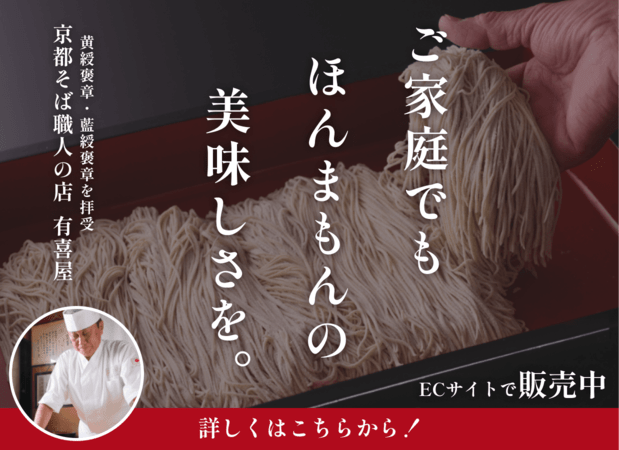
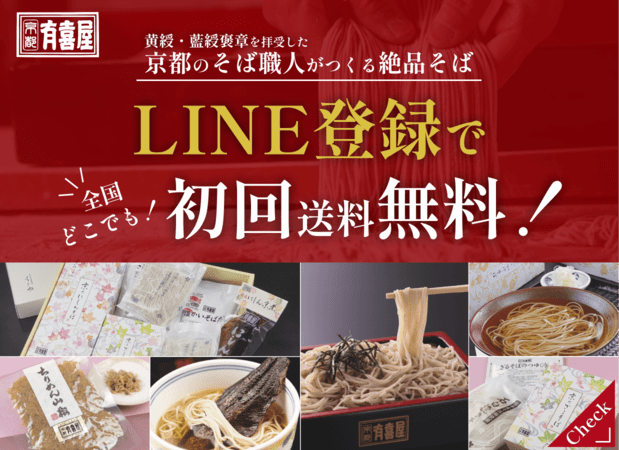
We’re selling the finest soba noodles in our online shop!
目次
1. What Is Soba?
Before introducing Kyoto-style soba, let’s first look at what soba is.
Soba is one of Japan’s traditional noodle dishes. Along with ramen and udon, it is widely enjoyed throughout Japan, and different regions have developed their own flavors, toppings, and ways of eating it.
While ramen and udon are mainly made from wheat flour, soba is made primarily from buckwheat flour, which comes from ground buckwheat seeds. This gives soba its distinctive aroma, flavor, and pleasantly firm texture, which differ from wheat-based noodles.
Soba is not only a noodle dish but also a food closely connected to Japanese daily life and seasonal customs. For example, many Japanese people eat “Toshikoshi soba” on New Year’s Eve to mark the end of the year. There is also a custom called “Hikkoshi soba,” in which soba was traditionally given to neighbors after moving to a new home.
In this way, soba is both a familiar everyday food and a traditional dish through which you can experience Japanese history and culture.
What Is Soba? A Simple Guide to Japan’s Traditional Buckwheat Noodles for International Visitors
2. What Is Kyoto-Style Soba? A Soba Culture That Developed in Kyoto
There are many different soba cultures across Japan. In Kyoto, soba has developed in connection with the city’s dashi culture, Kyoto cuisine, and local ingredients, creating a distinctive Kyoto-style way of enjoying soba.
Kyoto was Japan’s capital for many centuries and developed a rich and refined food culture, including Kyoto cuisine and Buddhist vegetarian cuisine known as shojin ryori. Within this cultural setting, soba also came to be appreciated not only for the aroma and texture of the noodles themselves, but also for the harmony between the noodles, dashi, and toppings.
Kyoto has long cherished a delicate dashi culture that values kombu, a type of dried kelp. By enjoying soba together with dashi that enhances the natural flavors of the ingredients, you can experience the gentle yet deep taste that is characteristic of Kyoto-style soba.
Eating Kyoto-style soba is not simply about enjoying a noodle dish. It is also a way to experience Kyoto’s traditional food culture through the culture of appreciating dashi, which is deeply connected to Kyoto cuisine.
3. Differences Between Tokyo-Style Soba and Kyoto-Style Soba
Although both are called “soba,” Tokyo-style soba and Kyoto-style soba have different characteristics, shaped by their respective regional cultures. Tokyo, formerly known as Edo, saw soba culture spread widely during the Edo period, while Kyoto developed a more refined style influenced by Kyoto cuisine and dashi culture.
| Kyoto-Style Soba | Tokyo-Style Soba | |
| Dashi / Broth | A light and elegant flavor that highlights kombu-based dashi | A relatively stronger flavor that highlights soy sauce and bonito flakes |
| Cultural Background | Influenced by Kyoto cuisine | Influenced by Edo town culture |
| Taste | Refined, mild, and mellow | Rich, bold, and full-bodied |
| How to Enjoy | Enjoy the harmony between soba and dashi | Enjoy the aroma and smooth texture of the soba noodles |
Kyoto-style soba is enjoyed together with the elegant umami of kombu-based dashi, while Tokyo-style soba often emphasizes the aroma and smooth texture of the soba noodles themselves. Although both are soba, their flavors and the ways they are enjoyed are quite different.
This variety is part of the charm of Japanese soba culture. Each region’s history and food culture are reflected in its own style of soba.
4. Signature Soba Dishes to Try in Kyoto
Kyoto has a food culture that values bringing out the natural flavors of ingredients, and dashi, especially kombu-based dashi, has played an important role. For this reason, Kyoto-style soba has developed as a dish that is enjoyed not only for the noodles themselves but also for the harmony between the noodles and dashi.
Another characteristic of Kyoto’s soba culture is the popularity of warm soba. Warm soba allows you to enjoy the aroma and umami of dashi more directly, making it a deeply rooted part of Kyoto’s soba culture.
Here are three signature soba dishes to try when visiting Kyoto.
- Nishin soba
- Kamo nanba soba
- Zaru soba, mori soba, and seiro soba
(1) Nishin Soba
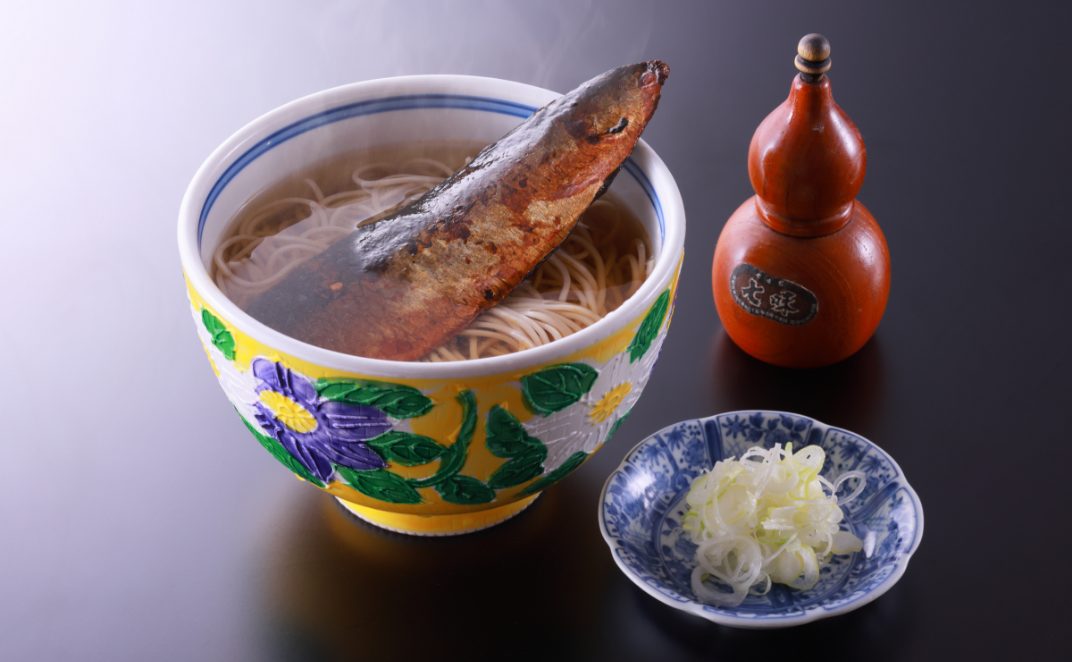
Nishin soba is a historic Kyoto specialty.
Kyoto is located far from the sea, so dried fish was once an important preserved food. Nishin soba is said to have been created during the Meiji period as a delicious way to enjoy preserved herring. It is a local Kyoto dish that reflects both the wisdom of the people of the time and the craftsmanship of Kyoto cuisine.
The main topping is migaki nishin, dried herring that has been slowly simmered in a sweet and savory sauce until tender. It is served on top of a bowl of warm soba.
When you break the tender herring with your chopsticks, its gentle sweetness blends with Kyoto’s light and elegant dashi, creating a deep richness and umami in the broth.
(2) Kamo Nanba Soba
Kamo nanba soba is not originally a Kyoto-born dish, but it has become a popular menu item in Kyoto thanks to its connection with local ingredients such as duck and Kujo negi, a traditional Kyoto green onion. In soba restaurants, the word “nanba” generally refers to green onion.
The rich umami of duck, the refined sweetness of Kujo negi, and the gentle flavor of Kansai-style kombu dashi come together beautifully in this dish. The flavorful fat from the duck melts into the dashi, creating a rich broth you will want to savor until the last sip.
It is a luxurious bowl of soba that warms the body from the inside, especially during Kyoto’s cold winter months.
(3) Zaru Soba, Mori Soba, and Seiro Soba
These are cold soba dishes served after the noodles are boiled and then chilled in cold water. The noodles are placed on a bamboo tray or in a seiro-style basket and eaten by dipping them into a slightly stronger cold dipping sauce called tsuke-tsuyu.
For first-time visitors, the names on the menu may seem confusing, but the difference is simple.
- Zaru soba: Cold soba served with shredded nori seaweed on top.
- Mori soba / Seiro soba: Cold soba served without nori seaweed.
Cold soba allows you to enjoy the natural aroma of buckwheat and the firm, refreshing texture of the noodles in the purest way. When rinsed in Kyoto’s clear water, soba has a particularly refreshing and smooth texture.
5. How to Enjoy Kyoto-Style Soba
There are no strict rules for eating soba, but knowing a few traditional ways to enjoy it can help you appreciate the charm of Kyoto-style soba more deeply.
By understanding how Kyoto-style soba is enjoyed and thinking about the history and culture behind it, your meal can become an even richer experience.
- First, enjoy the aroma of the soba.
- Enjoy warm soba together with dashi and toppings.
- Do not dip cold soba too deeply into the sauce.
- Finish your meal with soba-yu.
(1) First, Enjoy the Aroma of the Soba
For your first bite, try tasting the soba without adding anything. This allows you to enjoy the natural aroma and flavor of the buckwheat noodles.
Rather than taking too much at once, enjoy the noodles one bite at a time. This makes it easier to appreciate the aroma, texture, and harmony with the dashi or dipping sauce.
In Japan, it is not considered rude to lightly slurp soba. In fact, many people naturally slurp soba because it helps bring out the aroma as they eat.
(2) Enjoy Warm Soba Together with Dashi and Toppings
One of the highlights of Kyoto’s soba culture is warm soba served with kake-tsuyu, a warm broth that makes use of delicate dashi.
Warm soba is best enjoyed together with its dashi-rich broth and toppings.
Dishes such as nishin soba and kamo nanba soba also allow you to enjoy ingredients familiar in Kyoto cuisine. Rather than eating each element separately, try enjoying the noodles, dashi, and toppings together. This creates an elegant harmony of flavors.
Through the delicate umami of Kyoto-style dashi, you can experience a food culture deeply connected to Kyoto cuisine.
(3) Do Not Dip Cold Soba Too Deeply Into the Sauce
Cold soba is a dish that highlights the aroma and texture of the noodles themselves.
For this reason, it is best not to soak the entire portion of noodles in the dipping sauce. Instead, lightly dip only the tips of the noodles. This allows you to better enjoy the natural flavor of the soba.
Condiments such as wasabi and green onion are also best enjoyed little by little. Rather than mixing too much wasabi into the dipping sauce, you can place a small amount directly on the soba and enjoy the change in flavor.
Wasabi is an excellent partner that enhances the flavor of soba, but if you are trying it for the first time, start with a small amount.
(4) Finish Your Meal with Soba-Yu
After finishing your soba, try soba-yu as well.
Soba-yu is the hot water used to boil soba noodles. It has a gentle, slightly thick texture and contains the aroma, umami, and some of the flavor and nutrients released from the buckwheat during cooking.
For warm soba such as nishin soba or kamo nanba soba, you can enjoy soba-yu on its own as a light finish to the meal. It allows you to taste the mild aroma and flavor of buckwheat.
For cold soba such as zaru soba or mori soba, soba-yu is usually poured into the remaining dipping sauce. This softens the flavor of the sauce and allows you to enjoy the harmony between soba and dashi.
Ending the meal with soba-yu is one of the unique pleasures of Japanese soba culture.
Enjoy Authentic Kyoto-Style Soba at Ukiya
Eating soba in Kyoto is more than just having a meal. It is also a way to experience the dashi culture that lies at the heart of Kyoto cuisine.
Ukiya is one of the soba restaurants that continues to share Kyoto’s unique soba culture today. At Ukiya, you can enjoy carefully handmade soba made by skilled artisans using 100% domestically produced buckwheat flour, served together with Kyoto-style dashi that has a gentle yet deep flavor.
Ukiya also offers a selection of soba products through its online shop, allowing you to enjoy the flavor of soba at home.
When you visit Kyoto, experience the depth and charm of Japanese soba culture through a bowl of handmade soba at Ukiya.