
COLUMN
コラム
What Is Soba? A Simple Guide to Japan’s Traditional Buckwheat Noodles for International Visitors
この記事の監修者
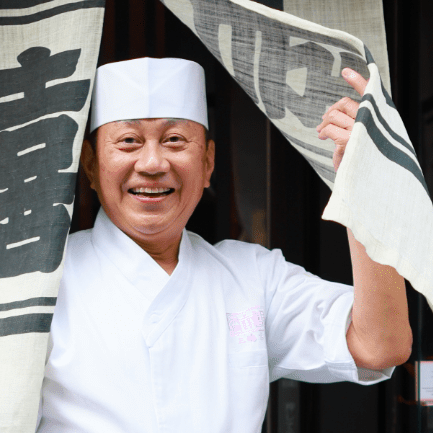
有喜屋 三代目店主
三嶋吉晴
有喜屋(うきや)三代目店主。有喜屋は1929年 京都先斗町に創業した本格手打ちそばと蕎麦料理を提供するそば屋です。 最年少で京都府優秀技能者表彰「京都府の現代の名工」を受彰。 手打そば職人としては全国で初となる「卓越技能章」を厚生労働大臣より受彰。 天皇陛下から授与される褒章である、「黄綬褒章」を拝受。
Along with sushi, tempura, and ramen, soba is becoming increasingly familiar to international visitors to Japan.
Soba is enjoyed not only as a simple and convenient meal, but also as a traditional food closely connected to seasonal customs and regional culture. Regional soba dishes are one of the many pleasures of traveling around Japan.
In this article, we will introduce the history, characteristics, types, and ways to eat soba, along with important points to keep in mind before trying it.
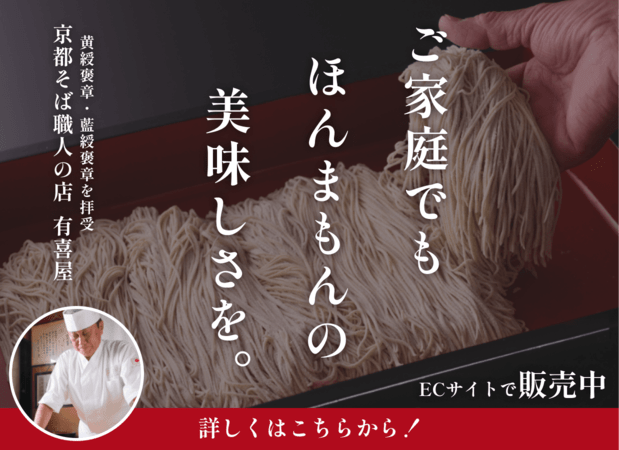
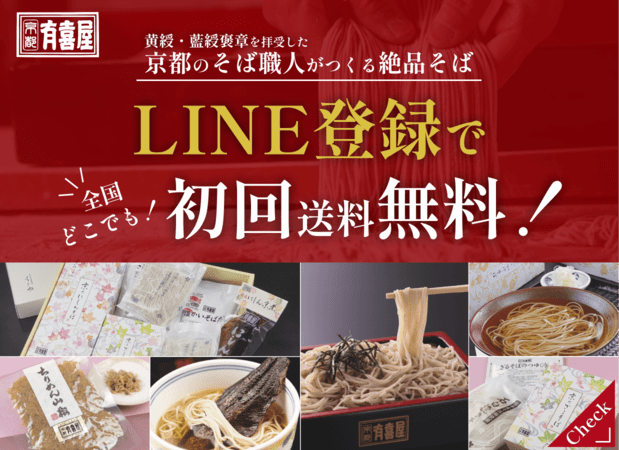
We’re selling the finest soba noodles in our online shop!
目次
1. What Is Soba? A Familiar Noodle Dish in Japan
Soba is one of Japan’s traditional noodle dishes and has long been part of Japanese food culture.
In this section, we will introduce the history of soba, why it has been loved by Japanese people, and the diverse soba cultures that have developed across different regions of Japan.
(1) Soba Is One of Japan’s Traditional Foods
Soba is a traditional food widely enjoyed in Japan, alongside rice and udon.
The history of soba in Japan is very old. Public records show references to soba in the Shoku Nihongi, a historical text from the Nara period (710–794).
Soba became widely enjoyed in its current noodle form around the middle of the Edo period. At that time, Edo, the political and economic center of Japan, saw the spread of a culture of eating soba at food stalls and soba shops. Because soba was quick to eat and reasonably priced, it became popular among busy townspeople. That tradition continues today, and soba can now be enjoyed casually throughout Japan.
Soba is also closely connected to Japanese traditions. A well-known example is Toshikoshi soba, which is eaten on New Year’s Eve. The long, thin noodles symbolize wishes for longevity and good health, and many people still eat soba before welcoming the New Year. Another custom is Hikkoshi soba, in which soba was traditionally given to neighbors after moving to a new home. In this way, soba has also been loved as a food that symbolizes connection and good relationships.
(2) Why Soba Is Loved by Japanese People
There are several reasons why soba has been loved in Japan for so many years.
- It is easy to enjoy.
- It has a distinctive aroma and flavor.
- It is known for its nutritional value.
First, soba is an easy meal to enjoy. Dried or fresh soba noodles can be prepared at home, and soba is also widely available when eating out. From quick standing soba shops at train stations to traditional soba restaurants, there are many ways to enjoy soba depending on your mood and budget.
Second, soba is loved for its unique aroma and flavor. The rich fragrance of buckwheat flour is one of the main characteristics that sets soba apart from other noodles. High-quality soba often has a natural sweetness and roasted aroma that become more noticeable as you chew, allowing you to enjoy a simple yet deep flavor.
Soba is also known for its nutritional value. It contains protein, dietary fiber, and rutin, a type of polyphenol. For this reason, soba is also popular among people who are conscious of balanced eating, and in recent years it has gained attention overseas as a lighter Japanese noodle option.
(3) Regional Soba Cultures Across Japan
Soba in Japan has developed under the influence of each region’s climate, environment, and local lifestyle. As a result, many areas have their own unique soba culture.
Representative examples include:
- Shinshu soba from Nagano Prefecture
- Izumo soba from Shimane Prefecture
- Echizen soba from Fukui Prefecture
- Wanko soba from Iwate Prefecture
- Nishin soba from Kyoto
Even though they are all called soba, the ingredients, noodle characteristics, broth flavor, toppings, and ways of eating can differ greatly by region. These differences strongly reflect the history and food culture of each area.
Comparing different regional soba dishes is one of the pleasures of traveling in Japan. Trying local soba during your trip can also be a way to learn more about the culture and lifestyle of each region.
2. What Is Soba Made From?
Soba is made from very simple ingredients. Here, we will introduce what soba is made from, its main characteristics, and how it differs from udon.
(1) Buckwheat Flour
The main ingredient of soba is soba-ko, or buckwheat flour, which is made by grinding buckwheat seeds.
Botanically, buckwheat belongs to the Polygonaceae family and is not a grain from the grass family like rice or wheat. However, because its seeds are used in a similar way to grains, buckwheat is sometimes called a “pseudocereal” in English, like quinoa and amaranth.
After buckwheat seeds are harvested, they are dried, hulled, and ground into flour. Water is then added to the buckwheat flour, and the dough is kneaded, rolled out thinly, and cut into noodles.
(2) Tsunagi: Binding Ingredients
Some types of soba are made not only with buckwheat flour but also with a binding ingredient called tsunagi.
By adding wheat flour, yam, or other binding ingredients to buckwheat flour, the noodles become less likely to break and develop a smoother, firmer texture.
A common type of soba is nihachi soba, which is made with 80% buckwheat flour and 20% wheat flour. On the other hand, soba made only with buckwheat flour is called juwari soba, and it allows you to enjoy the natural flavor of buckwheat more directly.
(3) Differences Between Soba and Udon
Soba and udon are both traditional Japanese noodle dishes, but their ingredients, texture, and flavor are different.
Soba is mainly made from buckwheat flour and water, while udon is made from wheat flour, salt, and water. Because of this, soba is often grayish or brownish in color, while udon is known for its white noodles. Soba has a distinctive buckwheat aroma and flavor, while udon is loved for its soft, chewy texture.
3. Types of Soba and Representative Menu Items
Soba is a versatile dish whose flavor changes depending on the temperature and toppings. Cold soba is refreshing, while warm soba allows you to enjoy the flavor of dashi broth more deeply.
Here are some representative soba dishes commonly enjoyed in Japan.
(1) Cold Soba
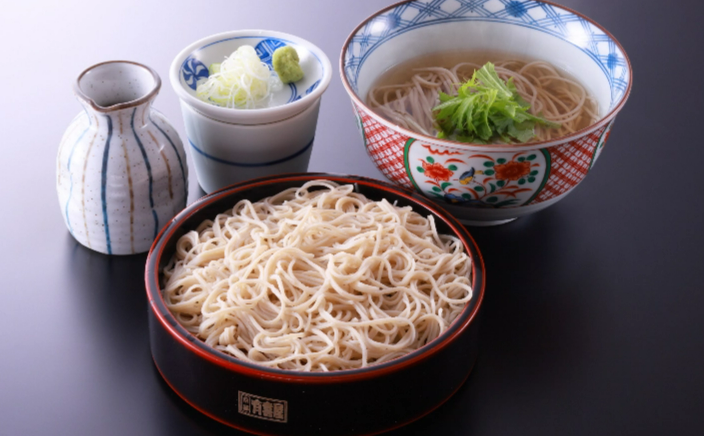
Cold soba is made by boiling soba noodles and then rinsing them in cold water to tighten the texture and bring out the flavor of the noodles. It is usually eaten by dipping the noodles into a relatively strong dipping sauce called soba-tsuyu. Because it is light and refreshing, cold soba is especially popular during the hot season.
Typical examples include zaru soba and mori soba, which are served on a bamboo tray or plate. Their refreshing appearance also makes them one of Japan’s classic summer dishes.
In recent years, salad-style soba topped with vegetables or cold pork, and tororo soba topped with grated yam, have also become popular as light meal options.
(2) Warm Soba
In colder seasons, warm soba served with hot dashi-based broth called kake-tsuyu is also widely enjoyed.
In addition to simple kake soba, which is boiled soba served in warm broth, many popular versions come with toppings.
Examples include:
- Nishin soba topped with sweet and savory simmered herring
- Kamo nanban soba with duck and green onion
- Tsukimi soba topped with a raw egg
- Kitsune soba topped with sweet and savory simmered fried tofu
Different toppings allow you to enjoy a wide variety of flavors.
4. How to Eat Soba
Soba also has unique ways of being enjoyed in Japan. Cold soba and warm soba are eaten differently, and knowing these differences will help you enjoy soba more deeply.
Here are the basic ways to eat soba.
(1) How to Eat Cold Soba
To eat cold soba, take a small portion of noodles with your chopsticks and dip it into soba-tsuyu.
Soba-tsuyu is made with ingredients such as soy sauce, dashi, and mirin, and has a rich umami flavor. You can add wasabi or chopped green onion according to your preference to bring out more aroma and flavor.
For dishes such as salad soba or tororo soba, where toppings are placed on top of the noodles, it is common to pour the soba-tsuyu over the dish before eating.
(2) How to Eat Warm Soba
Warm soba is enjoyed together with kake-tsuyu, allowing the umami of the dashi and the flavor of the soba to blend into a gentle, comforting taste.
Kake-tsuyu is usually slightly lighter than dipping sauce, making it easier to enjoy the delicate flavor of the dashi. You can also enjoy the changes in flavor created by the combination of soba, broth, and toppings.
(3) It Is Okay to Slurp Soba
In Japan, making a slurping sound while eating soba is not considered bad manners. Slurping the noodles together with air is a common way to enjoy the aroma more fully.
In some cultures, making noise while eating is avoided, but at soba restaurants in Japan, you can feel free to enjoy soba by slurping it.
5. What Is Soba-Yu?
Soba-yu is the hot water used to boil soba noodles. It is often slightly cloudy and has a mild taste and the gentle aroma of soba.
Drinking soba-yu after finishing soba is a unique part of Japanese soba culture.
(1) Why People Drink Soba-Yu After Eating Soba
There are several reasons why people drink soba-yu after eating soba.
- To enjoy the aroma of soba until the end of the meal
- To enjoy the flavor and components released from soba into the boiling water
- To enjoy the remaining dipping sauce without wasting it
Soba-yu retains the aroma of soba and provides a gentle finish to the meal. During boiling, some flavor and components from the soba are released into the water, and soba-yu allows you to enjoy them as well.
Another reason is to enjoy the remaining soba-tsuyu. By adding soba-yu to the rich dipping sauce, the flavor of the dashi becomes softer and easier to drink.
(2) Recommended Ways to Drink Soba-Yu
The most common way to drink soba-yu is to pour it into the remaining soba-tsuyu after finishing cold soba. You can also add wasabi, chopped green onion, or nori seaweed to enjoy a slightly different flavor.
When eating warm soba, soba-yu can also be enjoyed on its own like tea. If you want a richer taste, you may add soba-yu to the bowl of kake-tsuyu after finishing the noodles.
6. Things to Keep in Mind When Eating Soba
There are a few important points to keep in mind when eating soba.
- Soba allergy
- Not all soba is gluten-free
- Soba broth often contains seafood-based dashi
(1) Soba Allergy
Soba is a common food in Japan, but some people may have an allergic reaction to it.
Even a small amount can cause symptoms in some cases, so people with a soba allergy should be careful and check with the restaurant before ordering.
(2) Not All Soba Is Gluten-Free
Juwari soba is generally made without wheat flour in the noodles themselves. However, soba such as nihachi soba, which uses wheat flour as a binding ingredient, contains gluten.
Also, depending on the restaurant, wheat may be handled in the same kitchen, or the soba-tsuyu may contain soy sauce made with wheat. If you need to avoid gluten, it is safest to check the ingredients and preparation environment before ordering.
(3) Soba Broth Often Contains Seafood-Based Dashi
Soba-tsuyu and kake-tsuyu commonly use seafood-based dashi, such as bonito flakes. For this reason, vegan and vegetarian visitors should check in advance before ordering.
Some restaurants do offer vegan or vegetarian soba made with plant-based dashi, such as kombu or shiitake mushroom dashi. If this is important to you, choosing such a restaurant will give you peace of mind.
Enjoy Delicious Soba in Japan at Ukiya
Soba is not only delicious, but also one of Japan’s representative food cultures, allowing you to experience different regional flavors and traditions. By learning about the history, types, and ways to eat soba, you can enjoy it even more deeply.
When visiting Kyoto, we invite you to try authentic handmade soba at Ukiya, a specialty soba restaurant. At Ukiya, you can enjoy soba carefully handmade by skilled artisans using 100% domestically produced buckwheat flour, served with Kyoto-style aromatic dashi.
Ukiya also offers products through our online shop, allowing you to enjoy authentic soba flavors at home.
Experience Japan’s traditional soba culture through a bowl of soba at Ukiya.