
COLUMN
コラム
Soba History in Japan|From Ancient Buckwheat to Modern Soba Culture
この記事の監修者
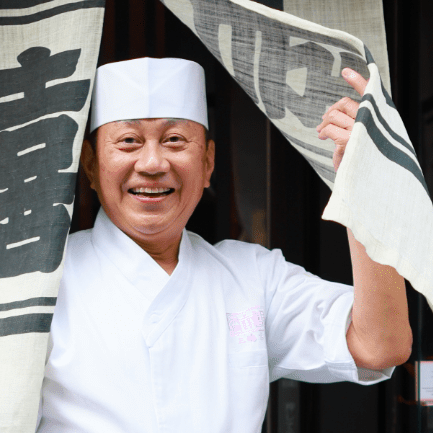
有喜屋 三代目店主
三嶋吉晴
有喜屋(うきや)三代目店主。有喜屋は1929年 京都先斗町に創業した本格手打ちそばと蕎麦料理を提供するそば屋です。 最年少で京都府優秀技能者表彰「京都府の現代の名工」を受彰。 手打そば職人としては全国で初となる「卓越技能章」を厚生労働大臣より受彰。 天皇陛下から授与される褒章である、「黄綬褒章」を拝受。
Soba is one of the traditional Japanese foods you should try when visiting Japan.
Familiar to generations of Japanese people, soba developed into a popular everyday food during the Edo period (1603–1868). Today, different regions across Japan continue to preserve their own styles, preparation methods, and ways of enjoying soba.
In this article, we explore how soba developed in Japan and why it became such an important part of Japanese food culture. Learning about the history of soba may make the bowl you enjoy during your journey through Japan even more special.
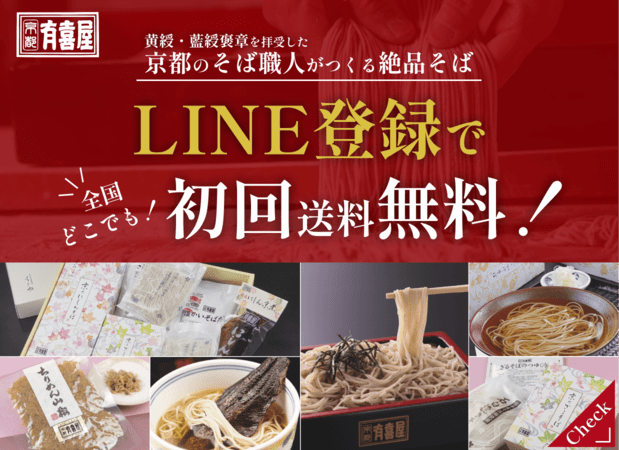
We’re selling the finest soba noodles in our online shop!
目次
1. When Did People Start Eating Soba in Japan? A Brief History
First, let’s look at how soba developed from an ancient crop into the noodles we know today.
(1) Soba Is Said to Have Arrived in Japan Before Rice
Buckwheat is believed to have originated in an area stretching from southern China to the Tibetan region and to have reached Japan during the Jomon period.
Pollen from plants belonging to the buckwheat genus has been discovered at ancient archaeological sites, suggesting that buckwheat was cultivated in the Japanese archipelago from very early times.
One reason buckwheat spread throughout Japan was its adaptability. It can be harvested in a relatively short period and can grow in mountainous areas and less fertile soil where rice cultivation is difficult. For this reason, it is believed to have served as a valuable food source even before rice cultivation became widespread.
Today, many people immediately associate the word “soba” with noodles. However, the history of Japanese soba began much earlier, with buckwheat as a crop closely connected to the land and the lives of the people who cultivated it.
Source: Ministry of Agriculture, Forestry and Fisheries of Japan
(2) Soba Was Also Used as an Emergency Food During the Nara and Heian Periods
In ancient Japan, soba was not yet eaten in the noodle form familiar to us today.
Buckwheat is believed to have been eaten in forms such as soba-gayu, a type of porridge made from buckwheat grains, and soba-gaki, made by mixing buckwheat flour with hot water.
Because buckwheat could be cultivated even in areas where crops such as rice were difficult to grow, it also became an important emergency crop that could help support people during times of food shortage.
The Shoku Nihongi, an official historical chronicle of Japan, records that in 722, during the Nara period, the cultivation of crops including buckwheat was encouraged as a measure against poor harvests caused by drought.
In other words, soba at the time was less of a delicacy and more of a valuable food that could help sustain people’s lives under difficult conditions.
This role as a food closely connected to everyday survival would eventually contribute to the development of distinctive soba cultures throughout Japan.
Source: “Shoku Nihongi”, as introduced by aff(あふ)agriculture forestry fisheries:November 2018
(3) The Birth of Soba-kiri, the Noodles We Recognize Today
Soba began to take on its modern noodle form around the Muromachi and Sengoku periods.
Until then, buckwheat had mainly been eaten as porridge or soba-gaki. Eventually, a new preparation known as soba-kiri emerged, in which buckwheat dough was cut into thin noodle-like strips.
An important historical record of soba-kiri appears in documents from Joshoji Temple in 1574.
The documents state that soba-kiri was served to people involved in repair work at the temple in the Kiso region of Nagano Prefecture. It is regarded as one of the oldest known written records of soba-kiri in Japan.
At the time, soba-kiri had not yet spread throughout the country. However, turning buckwheat flour into thin noodles marked an important step toward the soba that people enjoy in Japan today.
2. Soba Became a Popular Food During the Edo Period
The style of soba familiar to people in Japan today largely took shape during the Edo period.
As buckwheat cultivation and milling techniques developed and soba-kiri became more widespread, soba evolved into an accessible everyday food enjoyed by ordinary people in the city of Edo, present-day Tokyo.
(1) Buckwheat Production and Milling Techniques Developed
During the Edo period, buckwheat cultivation spread to different parts of Japan, while milling techniques using water-powered mills and other methods also developed.
As it became possible to produce buckwheat flour more efficiently and consistently, soba-kiri gradually became more widespread.
In Edo in particular, soba became popular as an affordable and convenient meal.
(2) Soba Evolved Toward Its Modern Form
As soba became more popular, people continued to develop techniques for making noodles that were tastier, easier to handle, and less likely to break.
One important development was the use of wheat flour as a binder. Because noodles made entirely from buckwheat flour can be difficult to form and may break easily, adding wheat flour helps give the noodles structure and a distinctive texture.
This contributed to the development of styles such as nihachi soba, which is commonly made with approximately 80% buckwheat flour and 20% wheat flour.
Other elements also evolved over time, including how buckwheat was milled, the thickness of the noodles, the dipping sauce or broth served with them, and the ingredients used as toppings.
Through these developments, many of the styles and techniques associated with modern Japanese soba gradually took shape during the Edo period.
(3) Soba Flourished Alongside Edo’s Street Food Culture
Street stalls also played an important role in the development of soba culture in Edo.
Because soba could be prepared and served relatively quickly, it was a convenient meal for craftspeople, merchants, and other busy city residents.
Soba was served not only at dedicated soba restaurants but also at street stalls, making it increasingly accessible to people from different walks of life.
In this way, soba became firmly established as an everyday food that could be enjoyed quickly and casually.
The food culture that developed in Edo can still be experienced in Tokyo today. Visiting a long-established soba restaurant offers travelers an opportunity to experience a culinary tradition with roots stretching back to the Edo period.
3. Japanese Soba Culture Continues Today
Soba became deeply rooted in Japan for more than simply its taste.
Over the centuries, soba became closely connected with Japanese nature and the seasons, temples and religious traditions, ideas about health and nutrition, annual events, and everyday customs.
(1) Soba and the Four Seasons
In Japan, seasonal changes are often celebrated through food, and soba is no exception.
Autumn is particularly associated with shin-soba, or “new soba,” made from freshly harvested buckwheat. It is prized by soba enthusiasts for its fresh aroma and distinctive flavor.
The way soba is served can also change with the seasons. Cold zaru soba is refreshing during the hot summer months, while warm kake soba is especially comforting in winter.
Soba can therefore be enjoyed throughout the year while still reflecting the character of each season. This close relationship with the seasons is one reason soba has remained a familiar part of Japanese food culture.
(2) Soba and Temple Culture
The history of soba also reveals close connections with Buddhist temples.
In medieval Japan, temples were among the places where knowledge and cultural influences from the Asian continent were introduced and developed. Soba culture is also thought to have evolved through these exchanges of people, knowledge, and food traditions.
One region where this connection can still be seen is Togakushi in Nagano Prefecture.
During the Edo period, soba-kiri is said to have been served to pilgrims staying at shukubo, traditional temple lodgings in Togakushi. Over time, the relationship between pilgrimage and hospitality helped shape the regional tradition now known as Togakushi Soba.
Soba, therefore, developed not simply as a meal but also in connection with religion, pilgrimage, and Japanese traditions of hospitality.
(3) Health and Nutrition
Soba is also valued for its nutritional qualities.
Buckwheat contains protein, dietary fiber, vitamins, minerals, and rutin, a type of polyphenol.
However, modern nutritional knowledge is not the only reason soba has been appreciated in Japan.
Historical writings also described soba in relation to health and nourishment. The Honcho Shokkan, an Edo-period work on Japanese foods, for example, contains descriptions of the qualities traditionally attributed to soba.
These historical perspectives show that soba has long been viewed as more than simply a satisfying meal and has held a place in Japanese ideas about food and well-being.
(4) Soba in Annual Events and Everyday Customs
Soba is also closely connected with annual events and traditional customs in Japan.
| Soba Custom | Meaning / Origin |
| Toshikoshi Soba | A custom of eating soba on New Year’s Eve. It is associated with wishes for longevity and health, as well as cutting off the misfortunes of the past year. |
| Hikkoshi Soba | IA custom of giving soba to people in the neighborhood after moving to a new home. It expresses the wish, “May we stay close and have a long-lasting relationship.” The custom spread during the Edo period, but is less common today than it once was. |
(5) Regional Soba Cultures Across Japan
Japan’s diverse regional soba traditions are another sign of how deeply the food is connected to local culture.
Although they are all called “soba,” their preparation, appearance, flavor, and serving styles can vary considerably depending on local climate, ingredients, and history.
Three varieties are often referred to as Japan’s “Three Great Soba”:
| Types | Prefecture | Feature |
| Wanko Soba | Iwate Prefecture | Small servings of soba are repeatedly added to the diner’s bowl. |
| Togakushi Soba | Nagano Prefecture | A regional soba tradition closely connected with Togakushi’s history of pilgrimage. |
| Izumo Soba | Shimane Prefecture | Known for its darker color and distinctive serving styles. |
Many other regional varieties can be found throughout Japan, including Shinshu Soba in Nagano, Echizen Soba in Fukui, and Kawara Soba in Yamaguchi.
Trying local soba while traveling is therefore more than simply enjoying a regional dish. It can also offer a glimpse into the history, climate, and traditions of the place you are visiting.
4. How to Enjoy Soba in Japan
Once you know a little about the history of soba, you can also pay attention to the different ways it is enjoyed in Japan.
Japanese soba can be served cold, as with mori soba or zaru soba, or hot in broth, as with kake soba. Cold soba allows you to appreciate the aroma and texture of the noodles, while hot soba offers the combined flavors of the noodles, broth, and dashi.
Condiments such as wasabi, green onion, and grated daikon can also add different flavors and aromas. Slurping soba is generally acceptable in Japan, and when eating cold soba, you may also be served sobayu, the hot water in which the noodles were cooked, to mix with the remaining dipping sauce and enjoy at the end of the meal.
For a step-by-step guide to dipping sauce, condiments, sobayu, and Japanese soba etiquette, see our guide below.
How to Eat Soba in Japan|A Beginner’s Guide to Enjoying Japanese Soba
5. What to Know Before Eating Soba in Japan
Before enjoying soba in Japan, travelers should also be aware of food allergies and dietary restrictions.
(1) Soba Allergy
Buckwheat can cause an allergic reaction in some people.
If you have a known buckwheat allergy or are concerned about food allergies, make sure to check with restaurant staff before ordering. If communicating in Japanese is difficult, carrying an allergy card or using a translation tool can make it easier to explain your requirements.
(2) Soba Is Not Always Gluten-Free
Buckwheat itself does not contain gluten, but not all soba noodles served in Japan are gluten-free.
Many soba noodles contain wheat flour as a binder to make the noodles easier to handle and give them a smoother texture.
If you need to avoid gluten, do not assume that a dish is gluten-free simply because it is called soba. Ask the restaurant about the ingredients and possible cross-contact before ordering.
(3) Soba Is Not Always Vegetarian or Vegan
Although buckwheat itself is plant-based, soba dishes are not necessarily vegetarian or vegan.
Soba dipping sauces and broths commonly use dashi made with ingredients such as katsuobushi (dried bonito flakes) or niboshi (dried small fish). Some dishes may also include seafood, meat, or tempura.
If you are vegetarian or vegan, check the ingredients used not only in the noodles but also in the broth, dipping sauce, and toppings before ordering.
Knowing the History Makes Every Bowl of Soba More Special
Soba has supported and accompanied the lives of people in Japan for centuries.
From its ancient roots to its development as a popular food during the Edo period, soba has been passed down to the present day through regional traditions and the skills of generations of craftspeople.
A single bowl can reflect many aspects of Japanese culture: its history, changing seasons, local landscapes, and everyday life.
Kyoto offers another distinctive way to experience this tradition. The city’s rich dashi culture has influenced its cuisine, including the way soba is prepared and enjoyed.
When you visit Japan, consider taking the time to enjoy freshly prepared soba while thinking about the history and culture behind it.
At Ukiya in Kyoto, you can experience Japanese soba culture through carefully prepared soba made by skilled craftspeople.
Ukiya also offers products through our online shop, allowing you to enjoy authentic soba flavors at home.
Once you know the story behind the noodles, your next bowl of soba may become one of the most memorable food experiences of your journey through Japan.